
Socialising kittens while they are tiny is one of the most important things a breeder ever does. Get it right and you hand your kitten buyers a confident, friendly, well-adjusted cat for life.
Finding reliable information on kitten socialisation is harder than it should be. A lot of what’s online is simply wrong — one big pet-food site suggests taking your kitten to the park to socialise it, and plenty of sources tell you the critical period runs from eight to ten weeks. By eight weeks the most important window has already closed.
There has been little research on kittens specifically, but a great deal on puppies, and most young mammals develop along similar lines. I first came across this in the early sixties, when Guide Dogs for the Blind opened a new breeding centre and puppy-walking scheme. Before that, dogs were bought in from various breeders and the pass rate was abysmal — it cost a fortune to produce one working dog. Once they selected for good temperament and socialised the puppies early with puppy walkers, the pass rate climbed to almost one hundred per cent. I bred Siamese in the seventies and Labradors in the eighties using exactly that knowledge, and now I’m back with Siamese I’m more aware of this crucial period than ever.

The Critical Period Is Two to Seven Weeks
The window that matters most is between two and seven weeks of age. Research suggests that information reaching the brain during this time opens up pathways — I think of them as information highways. Studies comparing house-reared dogs that had early learning with kennel-reared dogs that didn’t found the kennel dogs had far fewer of these pathways. The same pattern holds in pets and in people. Whatever your kittens will meet in their new homes, they need to meet a version of it now — eight weeks is too late. (International Cat Care’s veterinary guidance agrees the key window is two to seven weeks.)
Start Before They’re Even Born
My kittens are exposed to sound, sight and smell from the moment they’re born — and arguably before. There’s good evidence that babies in the womb can hear, and that certain music supports brain development, Mozart being a favourite. Jasmine, our queen, listened to Mozart daily before her litter arrived. From birth the kittens heard everything from classical music to Meat Loaf, plus a sound-effects CD with just about every noise imaginable — aeroplanes, thunderstorms, pigs, people screaming. A newborn’s hearing is hard to assess because of how the brain develops, but the ability to react appears within a couple of weeks, and by then they’re already used to a noisy world.
Where Kittens Are Raised Matters
Plenty of breeders I know raise their kittens somewhere they’ll be well socialised — but some still believe kittens should be kept in a quiet room with no visitors, and kittens raised outside in a cattery situation tend to lose out on early learning too. Mine start in a bedroom because it’s convenient, but they’re exposed from day one to the full life of the house. As soon as they’re mobile they go everywhere — especially the kitchen, with its washing machine, dogs barking, and people coming and going. Their room must look very odd to visitors: vacuum cleaners running daily, toy dogs that bark and walk, and a range of musical instruments.
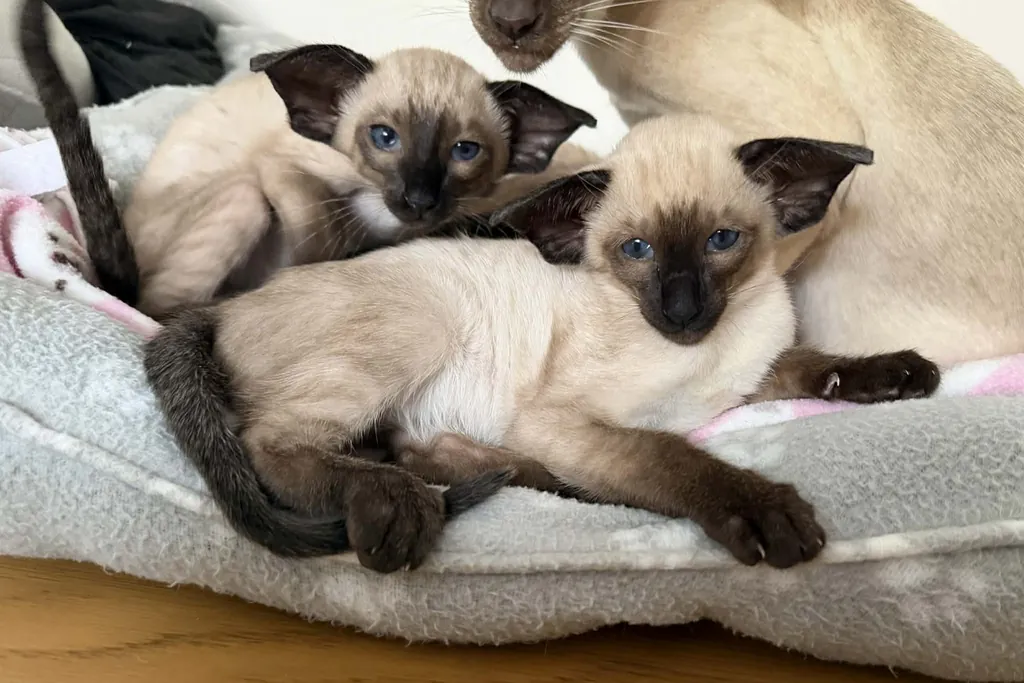
The Pen, and Daily Handling
I like to start my kittens in a pen. It’s especially good training if you intend to show, but teaching any young animal that there are boundaries is valuable in itself. While they’re still immobile and penned, I get as many people as possible to come and sit in the room — babies and toddlers included — exposing the kittens to different scents, sounds and voices. I’m lucky to have lots of friends who don’t own cats, so there’s no disease worry; once cat-owning visitors come, a quick hand-disinfect covers it.
Daily handling is the heart of it. We cut nails regularly, clean ears, wipe eyes, brush them, and get them used to having their tails and mouths touched — everything a vet or a new owner will one day need to do. Research backs this up: kittens handled by several different people before seven weeks grow into more sociable adults. Jasmine had eight kittens in her first litter, which was a lot to keep an eye on, and visitors were amazed to see them all racing around confidently. Hard work, but it paid off: every single owner told me how friendly and outgoing their kitten was.
A Book Worth Reading
For first-time kitten owners I recommend What Is My Cat Thinking? The Essential Guide to Understanding Your Pet by Gwen Bailey (Hamlyn, 2002). Bailey is an excellent canine and feline behaviourist and it’s a sensible, readable starting point.
Early socialisation isn’t a luxury — it’s the difference between a nervous cat and a bombproof one. It sits right alongside the rest of the work of raising a litter, which I cover in full in my complete guide to breeding Siamese cats and in my articles on hand feeding and weaning.
New to breeding Siamese?
My complete breeding guide walks through the whole journey — from choosing a queen to rearing and rehoming a confident, well-socialised litter.
Frequently Asked Questions
When is the best time to socialise a kitten?
The critical window is roughly two to seven weeks of age. This is when the brain is most receptive to new sights, sounds, people and handling. Socialisation should continue afterwards, but the foundations are laid in those early weeks.
Can you socialise a kitten too early?
No — gentle exposure begins from birth. Newborns benefit from being handled, hearing household sounds and being part of family life, all while staying safely with their mother.
What happens if a kitten isn’t socialised early?
Kittens that miss early socialisation are far more likely to grow into fearful, anxious or even aggressive adults that struggle to adapt to new situations. The window doesn’t fully reopen later.
How can a breeder socialise a whole litter?
Raise them in the busy part of the house, expose them daily to everyday sounds and handling, and invite a steady stream of different people — including children — to meet and handle them once they’re mobile.
I’ve bred Siamese (and Labradors before that) for many years — more about me and this site here.